Forton Furniture Forton Furniture

How to Choose a Round Dining Table Over a Rectangular One?

Time:2026-10-26 Author:Sienna
0%

Choosing the right dining table affects more than appearance. It shapes conversation, movement, seating comfort, and the daily rhythm of your home. Many homeowners compare familiar rectangular designs with the softer, more flexible form of a round table. The better choice depends on your room dimensions, household size, and dining habits.

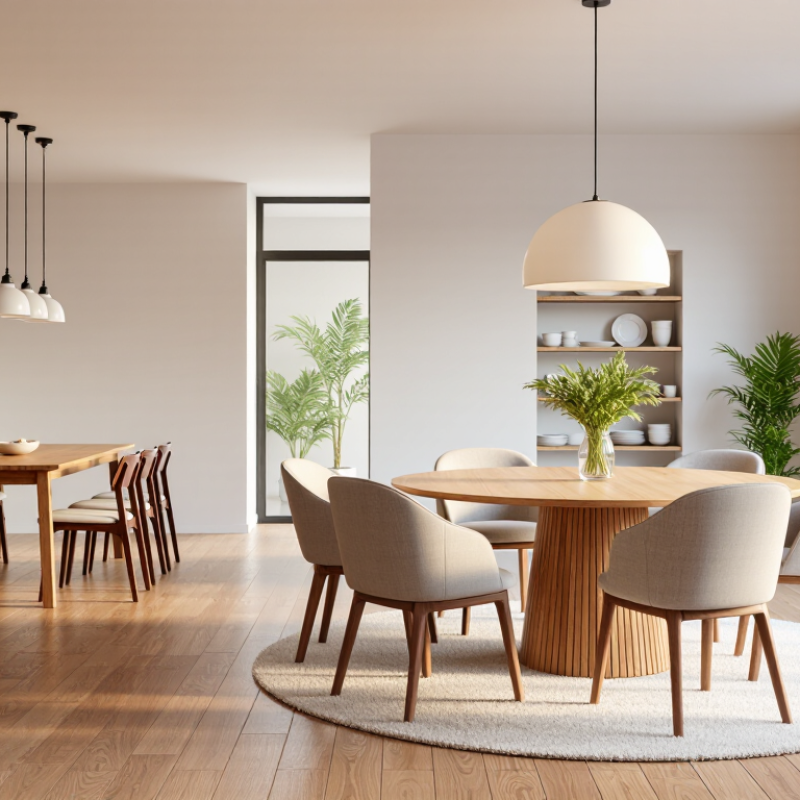
Why choose a round dining table over a rectangular one? A circular surface gives every guest a similar view and encourages direct conversation. There is no formal head position. This can make family meals and small gatherings feel more relaxed. A round table also removes sharp corners, which may help in narrow walkways or homes with young children. Measure carefully, though. A table that looks compact may still need space for chairs and comfortable movement. Leave about 36 inches between the table edge and nearby walls when possible. Small details matter.

In my experience reviewing dining layouts, round tables work especially well in square rooms, breakfast areas, and open-plan apartments. A pedestal base can provide extra legroom, while a central extension leaf can increase capacity when guests arrive. Still, round tables are not perfect. Large versions may make serving dishes harder to reach, and some rooms suit a long tabletop better. Personal preference can mislead us. Draw the table’s footprint on the floor with tape before buying. Sit around it. Walk past it. That simple test often reveals more than a showroom display.
How to Choose a Round Dining Table Over a Rectangular One?

Measure Room Clearance: Allow 36 Inches Around the Dining Table

How to Choose a Round Dining Table Over a Rectangular One?

Measure Room Clearance: Allow 36 Inches Around the Dining Table

A round dining table can improve movement in compact dining rooms. Its curved edge removes sharp corners from busy walking paths. However, the table still needs breathing space. The National Kitchen & Bath Association’s Kitchen Planning Guidelines recommend about 36 inches between a table edge and nearby walls or obstructions. This distance lets diners pull out chairs without scraping plaster or blocking circulation.

Measure from the table’s widest point, not its center. For a 48-inch round table, add 72 inches of clearance for a practical footprint. The result is a 120-inch, or 10-foot, room width. Tight rooms need honesty. A smaller table may serve better.

I once measured only the tabletop and ignored chair movement. That shortcut was wrong. Open each chair fully during your test. Walk behind it with a serving dish. Can another person pass comfortably? If not, reduce the diameter.

The ADA 2010 Standards use 36 inches as a common minimum for accessible routes. A dining room is not automatically governed by those standards, but the measurement provides a useful professional benchmark. In high-traffic homes, 42 to 48 inches may feel more realistic. Door swings, radiators, and sideboards can quietly consume space. Sketch them before ordering. A round table looks flexible, yet poor clearance can make the room feel surprisingly rigid.

Compare Seating Capacity: Plan 24 Inches of Table Edge per Diner

A round dining table can feel more welcoming than a rectangular one, but seating depends on usable table edge.
Plan about 24 inches of edge per diner. This space allows a plate, cutlery, and comfortable elbow room. Less space may work for a quick meal, but it often feels cramped during long dinners.

For a 48-inch round table, the circumference is roughly 151 inches. Dividing that by 24 suggests space for six diners. In real homes, four to six people usually feels more comfortable. Table legs, chair width, and serving dishes reduce the practical capacity.

A 60-inch round table offers about 188 inches of edge. It can support six to eight diners, although eight may feel crowded with large plates.

Rectangular tables are easier to estimate.
A 72-inch table provides roughly three 24-inch spaces on each long side, often seating six people. A 96-inch table can accommodate eight diners more comfortably. Round tables use corner space better, yet their curved edge changes how chairs sit. I have found that paper calculations can look generous. They do not show how far guests must lean for a shared dish. Leave extra room for wide chairs and table settings. Measure the chair arms, too. That small detail is easy to miss.

Assess Conversation Space: Choose Round Tables for Equal 30–48-Inch Reach

How to Choose a Round Dining Table Over a Rectangular One?

Conversation feels different when every diner sits at a similar distance from the center. A round table removes sharp corners and reduces the “head of the table” effect. For planning, assess a 30–48-inch conversation reach around each seat. This range can support clear eye contact without forcing guests to lean forward or raise their voices. The exact distance depends on chair width, table diameter, and room acoustics.

Picture a shared meal with six people. At a round table, each guest can turn slightly and address the group. No one is hidden behind a corner. A rectangular table may offer more linear serving space, but people at opposite ends often speak across several seats. That distance can weaken casual conversation. Measure the available room carefully, leaving comfortable clearance behind every chair. A round shape also makes walking paths feel less restricted.

Experience still matters more than a simple measurement. I have found that oversized round tables can create their own problem: the center becomes visually attractive but socially distant. Test the layout with temporary chairs before buying. Invite several people to sit, talk, and reach for shared dishes. Thirty inches may feel intimate, while forty-eight inches may suit quieter dinners. These figures are useful guides, not guarantees. Some rooms need a smaller table. Others need fewer seats.

Check Accessibility: Preserve a 32-Inch Minimum Clear Passage

A round dining table can improve movement, but its footprint still needs disciplined planning. Keep at least 32 inches of clear passage from the table edge to walls, counters, and furniture. This is a practical residential benchmark, not a universal accessibility code. The 2010 ADA Standards require 32 inches of clear width at certain door openings, while accessible routes generally require 36 inches. Designers should not confuse these measurements.

Measure the occupied room, not an empty floor plan. Pull out every chair fully, then walk around the table carrying a plate. A 48-inch round table needs approximately 24 inches of radius before chairs are added. With a 20-inch chair depth, the functional footprint approaches 88 inches across. That can quickly consume a narrow dining area.

The National Kitchen & Bath Association planning guidelines commonly use 36-inch clearances for comfortable circulation, so 32 inches should be treated as the minimum, not the target. I have seen layouts look generous on paper but feel cramped beside a sideboard. Small errors become daily friction. Recheck the tightest corner.

The 2023 American Housing Survey from the U.S. Census Bureau reports that many homes include compact dining spaces, making circulation efficiency increasingly important. A round table removes sharp corners and supports smoother turning paths, especially near doorways. However, its chairs may spread outward unpredictably. Mark the tabletop and chair zones with painter’s tape before buying. Leave more space near the main entrance, and keep one route visibly unobstructed. Furniture placement should support real movement, not just attractive symmetry.

Match Table Diameter to Use: Select 36–60 Inches for Two to Six Diners

Choosing a round dining table starts with the number of people you usually serve. Diameter matters more than visual size. A 36-inch table suits two diners comfortably, leaving room for plates, glasses, and a small centerpiece. It also works well in compact apartments where every walkway counts.

For four people, consider a 42- to 48-inch diameter. The larger option gives each person more elbow space and supports shared dishes in the center. A 54- to 60-inch table can seat six diners, but chair width and leg placement still matter. Six narrow chairs may fit on paper, yet feel crowded during a long meal. Leave about 36 inches between the table edge and nearby walls or furniture for comfortable movement.

In my furniture-planning experience, people often choose by appearance alone. I once recommended a 60-inch table for a family dining area, assuming frequent gatherings. The surface looked generous, but the room felt tight when chairs were pulled out. I should have measured the walking path first. Measure your room with tape, then mark the proposed diameter on the floor. Sit around the outline with real chairs. This small test reveals awkward spacing quickly. If meals usually involve two people, a 36- or 42-inch table may feel warmer and easier to use than an oversized one.

FAQS

How much space should I leave around a round dining table?

Leave about 36 inches between the table edge and nearby walls or furniture. This space helps chairs move freely. For busy rooms, 42 to 48 inches may feel better. Measure the widest table point.

Is 32 inches enough clearance?

Treat 32 inches as a minimum residential benchmark. It may allow passage, but it can feel tight beside chairs or cabinets. Thirty-six inches is a more comfortable target. Check the narrowest corner carefully.

How do I calculate the table’s total footprint?

Add the table diameter to clearance on both sides. A 48-inch table needs roughly 72 inches of clearance at 36 inches each side. The practical room width becomes about 120 inches. That equals 10 feet.

What table diameter suits two, four, or six diners?

A 36-inch table suits two people comfortably. Choose 42 to 48 inches for four diners. A 54- to 60-inch table can serve six people. Chair width still matters.

Should I measure only the tabletop?

No. Measure the occupied room, including pulled-out chairs. Open every chair fully during your test. Walk behind one while carrying a plate. My earlier shortcut was wrong.

How can I test the layout before buying?

Mark the tabletop outline with painter’s tape. Add chair zones around the circle. Sit in real chairs at each position. Walk toward the doorway with a serving dish. Notice the tight spots.

Why can a round table still make a room feel cramped?

Its curved edge improves turning paths, but chairs spread outward. Door swings, radiators, and sideboards also consume space. A round shape is not automatically space-saving. Attractive symmetry can hide daily friction.

What should I do if the room feels too tight?

Reduce the table diameter or move nearby furniture. A smaller table may serve better. If two people usually dine together, 36 or 42 inches can feel warmer. Recheck the main walking route. It should remain visibly open.

Conclusion

Why choose a round dining table over a rectangular one? A circular design can make a dining area feel more balanced, improve conversation, and use space efficiently. Begin by measuring the room and leaving at least 36 inches of clearance around the table so chairs can move comfortably and people can walk behind seated diners. You should also preserve a minimum 32-inch clear passage wherever regular traffic passes.

Next, consider seating and daily use. Allow about 24 inches of table edge per diner to provide enough elbow and serving space. Round tables create a more equal conversational distance, with an ideal reach of approximately 30 to 48 inches across the table, helping everyone participate in meals and discussions. For most homes, a diameter between 36 and 60 inches works well, accommodating roughly two to six diners depending on chair size and placement. Choose the smallest size that meets your seating needs while maintaining comfortable movement and a welcoming atmosphere.

Sienna

Sienna

Sienna is a skilled marketing professional with a deep expertise in our company’s core products and services. With a passion for innovation and detail, she plays a pivotal role in crafting insightful blog posts that not only highlight the unique features of our offerings but also provide valuable......