Forton Furniture
Furniture can look solid in a showroom and loosen after months of daily use. The connection between its parts often explains why. How to identify high-quality furniture joints is therefore a practical question for buyers, designers, and makers—not just a woodworking detail. A tight-looking seam helps, but appearance alone cannot reveal glue coverage, internal reinforcement, or how well a joint handles repeated stress.
The 2024 Grand View Research report valued the global furniture market at USD 736.6 billion in 2023 and projected continued growth. That scale makes clear product evaluation increasingly important, though market figures do not measure joint durability. Technical references offer more useful clues. The USDA Forest Products Laboratory’s Wood Handbook explains how moisture changes can cause wood to shrink or swell, placing stress on connections. For certain seating categories, ANSI/BIFMA X5.4 provides performance tests that include repeated-use and strength requirements. These sources do not certify every joint or furniture item. They do show why material, construction, and intended use must be considered together.
Look closely at the fit. Check for gaps, uneven shoulders, glue squeeze-out, and movement when you gently press the piece. Examine whether a mortise-and-tenon, dovetail, dowel, or screw-reinforced joint suits the load and material. A refined joint can still be poorly made. And a simple one can last. Without inspecting hidden surfaces or knowing the test history, certainty is difficult; that limitation deserves attention, too.
How to Identify High Quality Furniture Joints in 2026
A furniture joint does more than hold two boards together; it helps a chair or table handle daily force. As people lean, pull drawers, or shift a table, joints face changing pressure and repeated movement. A well-fitted mortise-and-tenon joint spreads load across a broad contact area. Loose gaps can let parts rack sideways, even when the frame looks sturdy. Screws may help, but their grip depends on pilot holes, material, and placement. No joint is perfect. Wood also expands and contracts with humidity, so a rigid fit may loosen over time.
Tips: Press gently on opposite corners and watch for twisting or clicking. Check underneath for even shoulders, clean glue lines, and flush fasteners. Test drawers while supporting the cabinet; a wobble may come from the frame, not the drawer joint.
Compare matching joints across the piece and notice whether each connection sits square. A chair should feel planted on a flat floor, without a sharp creak under ordinary pressure. These checks cannot reveal every hidden defect, and a heavy finish may conceal gaps. Appearance is only a clue; construction details matter more. A slightly uneven glue line is not always a failure, but visible movement deserves attention.
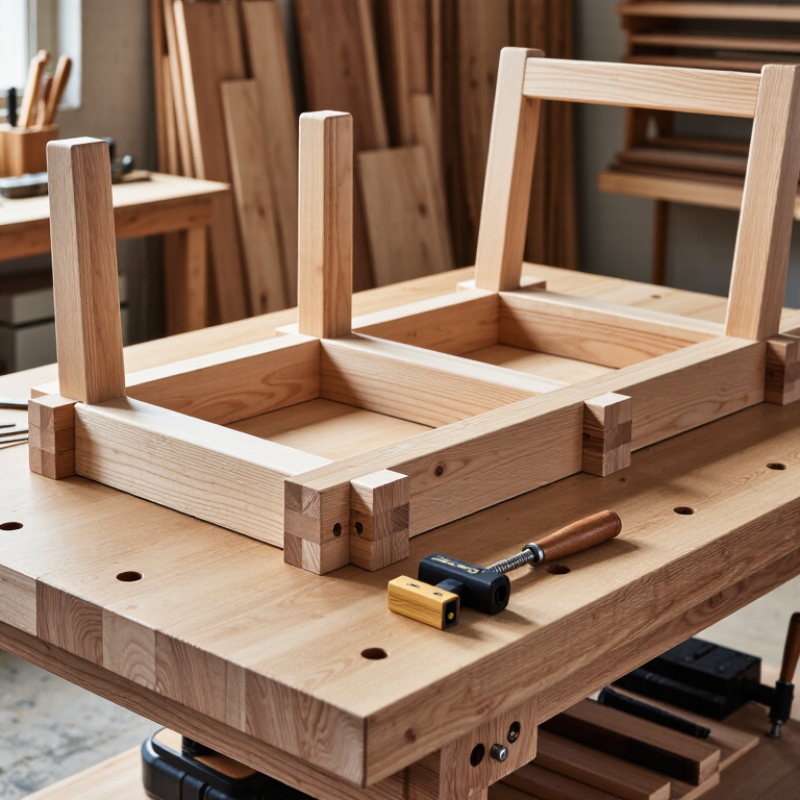
Furniture joints show how a piece handles weight, movement, and daily use. A mortise-and-tenon joint, where a shaped tenon fits into a slot, suits chair rails and table frames. Its broad shoulders help resist twisting when the fit is snug. Dovetails, with angled pins and tails, are common in drawer corners because they resist being pulled apart. They are not automatically better everywhere. A butt joint can work for a light shelf, especially when screws, dowels, or a reinforcing block add support.
Finger joints use interlocking rectangular cuts and often join boards lengthwise, such as in longer rails. For a simple cabinet carcass, dowels or biscuits can help align adjoining panels, though they do not replace sound construction. Check that corners sit flush and look for gaps, loose movement, or glue residue. A clean exterior is useful evidence, but it cannot reveal every hidden connection. I would not judge a piece by one joint alone; material quality and careful assembly matter too.
Tips: Gently press or wiggle a chair rail or drawer corner. Notice any shifting or clicking. Ask which joints are structural, and inspect less visible areas when possible. A tiny gap may be harmless, but repeated looseness deserves a closer look.
When inspecting furniture joints, look for tight shoulders, even alignment, and clean transitions between parts. Run a fingertip along the seam; a sharp ridge or open gap may signal poor fit. Gently press opposite corners. The frame should not twist, click, or rock. Check both sides, since a neat front can hide uneven assembly behind it. A hairline gap is not automatically a defect: solid wood can shift with seasonal moisture changes. Still, repeated gaps or visible glue failure deserve a closer look.
Professional testing gives useful context. ANSI/BIFMA X5.1-2017, a commercial seating standard, includes durability tests of 100,000 seat cycles and 120,000 back cycles. These figures are not a guarantee of home-furniture lifespan, but they show why joint strength matters beyond appearance. On a chair, inspect where legs meet rails and where the back joins the seat. On a table, check apron-to-leg connections for flush contact and balanced alignment. I sometimes find that a joint looks perfect until pressure is applied; visual inspection alone can miss movement.
Tips: Use a flashlight across the seam to reveal gaps. Compare matching joints, and test gently rather than forcing them. Don’t judge quality by excess glue; clean fit and stable alignment matter more. A small wobble may be fixable, but it should not be ignored.
A strong furniture joint starts with materials that move predictably. The USDA Forest Products Laboratory’s Wood Handbook reports typical green-to-oven-dry shrinkage of about 6–12% tangentially and 3–6% radially, with substantial variation by species. Indoor furniture rarely reaches oven-dry conditions, but seasonal humidity still stresses rigid joints. Check whether mating surfaces sit flush, glue lines are continuous, and end grain is protected from excess moisture. Small gaps matter. A smooth finish can hide them.
Fasteners should reinforce a well-fitted joint, not compensate for a poor one. In a cabinet corner, for example, screws driven into solid side grain generally hold better than screws relying on end grain alone. Look for pilot holes, snug hardware, and no splitting around screw heads. ANSI/BIFMA furniture-testing standards use repeated loading to assess durability; that principle matters at home, too. A chair that feels firm once may loosen after years of leaning and shifting. Not always obvious. Inspect joints under gentle pressure, and listen for clicks or creaks. I would not judge quality by a single showroom test: humidity, assembly, and everyday use can change the result.
How to Identify High Quality Furniture Joints in 2026
Comparing Joint Quality in Modern Furniture Designs in 2026
Modern furniture combines solid wood, plywood, metal fittings, and engineered panels, so joint quality depends on both material and construction. Compare similar pieces under the same conditions. Look beneath tables and inside drawers, where joints are easier to inspect. A well-fitted mortise-and-tenon joint should sit snugly, without visible gaps or excess glue. Dovetail drawers usually show interlocking pins and tails, though tidy machining alone does not prove strong construction. Screws and cam fittings can work well in panel furniture when they are aligned and firmly seated. Wobble matters. Gently press a corner and check for movement or clicking.
In 2026 designs, hidden connectors and minimalist frames can make inspection harder. Ask how a joint is secured and whether it can be tightened or repaired. For a chair, inspect the legs and stretchers; repeated side-to-side movement can reveal a weak connection. For a cabinet, check whether shelves remain level and doors sit evenly. These signs are useful, not conclusive: humidity, assembly, and wear can change performance. A polished surface may conceal rushed work. I would not judge a piece by one joint alone.
Tips: Use a phone light to inspect shadowed corners. Compare matching joints across the piece. Ask about materials and repair options, then test gently in the showroom. Don’t force anything.
Press opposite corners gently. Watch for twisting, clicking, or shifting. A solid-looking frame can still hide loose connections.
A shaped tenon fits into a slot, creating broad contact. This joint often suits chair rails and table frames, where twisting can occur.
Their angled pins and tails resist being pulled apart. Check drawer corners for gaps or movement. One joint alone does not prove overall quality.
No. It can work for a light shelf, especially with screws, dowels, or a reinforcing block. The details matter.
Look for snug hardware, pilot holes, and no splits near screw heads. Screws usually grip side grain better than end grain.
Yes. Wood changes size with humidity, which can stress a rigid fit over time. Small seasonal movement is easy to miss.
They are useful clues, not proof. Check whether surfaces sit flush and whether the joint moves under gentle pressure. Looks can mislead.
Place it on a flat floor and press gently on the rails. Notice sharp creaks or wobbling. A showroom test may not predict years of use.
Not always. A small gap may be harmless, but repeated looseness deserves a closer look. I might be overreading one uneven glue line.
This guide explains why furniture joints play a central role in a piece’s strength, stability, and lifespan. It introduces common joint types and the situations in which they are typically used, then shows how to assess the fit and alignment of connected parts. Even, secure connections, careful finishing, and the absence of obvious gaps or movement can offer useful clues about overall craftsmanship. The guide also considers how material choice and fasteners affect durability, especially when furniture is used regularly.
How to identify high-quality furniture joints also means looking beyond appearance. Comparing traditional joinery with modern furniture designs in 2026 can help readers understand how construction methods balance strength, practicality, and visual style. By considering joint type, workmanship, materials, and expected use together, buyers can make more informed choices and select furniture that is suited to their needs.
