Forton Furniture
How to secure heavy cabinets to the wall for safety is not a cosmetic task. It is a practical way to reduce tip-over risks, especially in homes where children may pull drawers or climb. A loaded cabinet can shift with surprising force. Even a small wobble deserves attention.
CPSC Chair Alex Hoehn-Saric has emphasized anchoring furniture as a way to help prevent tip-over incidents. Rather than present an unverified quotation as his exact words, this guide uses a clear safety reminder: “Anchor the cabinet before loading it.” That principle starts with the wall itself. Find a suitable stud or masonry surface, then choose hardware rated for the cabinet and wall type. Drywall alone may not hold a heavy unit securely.
Details matter. Empty the cabinet before moving it, check the manufacturer’s instructions, and use a level to keep the unit upright. Attach the anti-tip bracket firmly, then test for movement with gentle pressure. Stop if the wall crumbles, the fastener spins, or the cabinet still leans. A second person can help control the cabinet during installation. Small oversight is possible; recheck the connection after loading and whenever you move the unit. A bracket is not a substitute for sound installation, and every wall presents different conditions. When the wall material or hardware is uncertain, ask a qualified installer to assess it. Safety begins with a careful fit.
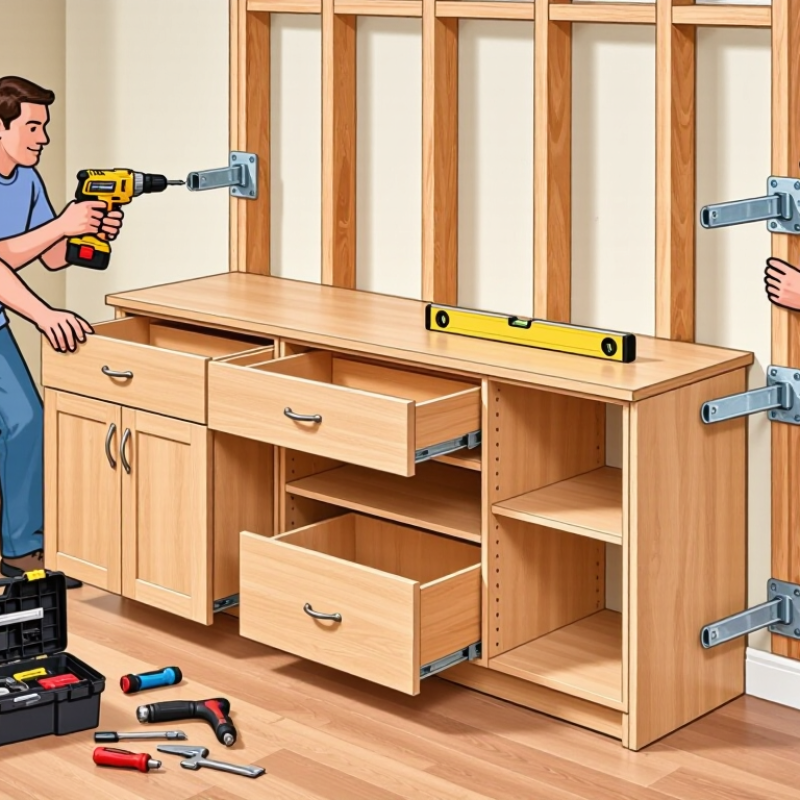
A heavy cabinet can tip when a child pulls a drawer, climbs a shelf, or leans against an open door. The danger is easy to underestimate: a cabinet may look stable until its weight shifts forward. The CPSC reports 472 tip-over-related deaths from 2000 to 2021, with children accounting for 81 percent. These figures cover tip-over incidents, not cabinets alone, but they show why securing furniture matters.
Tips: Check for a wall stud before drilling. Use a suitable anti-tip restraint, and follow its installation instructions. Attach one end to the cabinet’s solid frame and the other to the wall. Keep heavier items on lower shelves. Small details matter.
Before installation, inspect the cabinet’s back panel and identify where its weight rests. A thin decorative panel may not hold a restraint securely. If the wall material or cabinet construction is unclear, pause and ask a qualified installer for guidance. I might be tempted to skip this step when a cabinet feels steady, but a gentle push cannot reliably predict what happens when a child climbs or a drawer is pulled out. Recheck the restraint after moving the cabinet or changing its contents.
Before choosing fasteners, determine what your wall is made of. Drywall over wood studs, metal framing, and solid masonry each need different attachment methods. A stud finder can help locate framing, but confirm its reading at several points. Mark the stud edges lightly with pencil; the center matters when placing screws.
Check carefully. A quick tap is not proof. Stud finders can give false readings near pipes, wiring, corners, or thick plaster. Scan the area for hidden services before drilling, and pause if the results seem unclear. If you have drywall over wood studs, use cabinet screws long enough to pass through the cabinet rail and drywall and enter the stud securely. Do not rely on ordinary drywall anchors for a heavy cabinet.
For metal studs or masonry, select a fastening system rated for that wall material and the cabinet’s expected load. Metal framing may need reinforcement or a method specifically designed for its gauge. Masonry requires anchors suited to the particular block, brick, or concrete. Read the cabinet instructions, check the fastener manufacturer’s load guidance, and use enough attachment points. I’ve found that rushing the wall check is easy; correcting a misplaced hole is less so. If the wall type or framing remains uncertain, ask a qualified installer before mounting the cabinet.
A restraint is only as dependable as the surfaces holding it. Estimate the cabinet’s weight when full, including heavy dishes or tools stored near the top. Then check the restraint’s rated capacity and installation instructions. Ratings can depend on the number of fasteners and the materials they enter, so avoid assuming one strap rating covers every setup. A small label deserves a close look.
Identify the wall substrate before drilling. For a wood-framed wall, fasten into studs, not just drywall; use a stud finder, then confirm the location with a small pilot hole. For masonry, choose anchors specifically rated for the wall material and the expected load. Attach the cabinet end to a solid structural rail or frame, rather than relying on a thin back panel. That detail matters. I once treated two nearby-looking wall points as equally solid; they were not, and the restraint sat crooked. Recheck alignment and tighten fasteners without crushing the cabinet material. If the wall is damaged, the cabinet is unusually heavy, or the rating is unclear, pause and get qualified help before loading it.
Example loaded-cabinet weights shown in kilograms and their pound equivalents (1 kg = 2.20462 lb). These are reference values, not test results or restraint-capacity recommendations.
Weigh the cabinet with its contents before selecting restraints. Check the restraint’s published rating and confirm the complete installation—including fasteners and wall substrate—is suitable. A product rating alone does not establish the capacity of the installed system.
Heavy cabinets need a secure connection to the wall, not just a neat-looking bracket. Find the wall studs with a stud finder, then confirm their positions before drilling. Check for wiring or pipes in the area, and use the cabinet and bracket instructions to choose the correct fasteners. Drywall alone is not solid framing. If the wall is masonry, use hardware rated for that material instead.
Tips: Hold the bracket level and mark each hole clearly. Drill pilot holes only as instructed. Tighten fasteners firmly, but do not force them if they bind.
A small alignment error can leave a screw beside the stud instead of inside it. That is easy to miss when a cabinet covers the marks. Recheck the holes before lifting the cabinet, and have another person support its weight during attachment. Follow the specified number and placement of fasteners; a bracket with one screw missing may not perform as intended. When everything is secured, gently test for movement. If the cabinet shifts, stop using it and inspect the connection rather than adding random screws. It is tempting to rush this part. Don’t.
Once a cabinet is anchored, test it before loading it. Keep children and pets away. Press gently near the upper corners and check for rocking or a gap opening between the cabinet and wall. It should feel firm. Open and close each door slowly, watching for movement around the fasteners. A door that swings smoothly does not prove the wall connection is sound, so inspect the attachment points too. If the cabinet shifts, stop and unload it. Recheck the installation instructions and use fasteners suited to both the wall and cabinet. When the wall material or fixing points are uncertain, ask a qualified installer rather than guessing.
After loading, check the fasteners again. Look for loosened screws, pulled anchors, fresh cracks, or a cabinet leaning forward. Repeat the inspection after a few weeks, then periodically, especially if doors are used often. Store the heaviest items on the lowest shelves, close to the cabinet’s sides. Put lighter objects higher up. This keeps the center of weight low and reduces strain when someone opens a door. Avoid stacking heavy items near the front edge, where they can shift outward. I used to assume a cabinet was safe once it felt solid; that was too casual. A quick check can miss gradual movement, so make inspection part of ordinary room upkeep.
Cabinets can tip when a child pulls out a drawer, climbs a shelf, or leans on an open door. A steady-looking cabinet can still shift forward.
Reports recorded 472 tip-over-related deaths from 2000 to 2021. Children accounted for 81 percent. These figures cover tip-over incidents, not cabinets alone.
Identify the wall type and locate its framing. Scan for wiring and pipes, too. A quick tap is not proof.
Use a stud finder and check its reading at several points. Mark the stud edges lightly, then aim for the center. I would not guess.
Match the fasteners to the wall material and expected load. Wood studs, metal framing, and masonry need different attachment methods. Check the instructions.
Do not rely on ordinary drywall anchors for a heavy cabinet. For drywall over wood studs, use suitable screws that enter the stud securely.
Attach one end to a solid cabinet frame or structural rail, not a thin back panel. Secure the other end to the wall. Small detail, big difference.
Estimate the cabinet’s loaded weight, including heavy items on upper shelves. Check the restraint’s rated capacity and installation requirements. Ratings can depend on fasteners and wall materials.
Pause if the wall type, cabinet construction, or restraint rating is unclear. Ask a qualified installer, especially if the wall is damaged or the cabinet is unusually heavy. Recheck the restraint after moving the cabinet or changing its contents.
How to secure heavy cabinets to the wall for safety begins with understanding the risk: tip-over incidents can cause severe injuries and deaths. CPSC reports that 472 people died in furniture and television tip-over incidents from 2000 to 2021, and 81% of those who died were children. Before installing a restraint, identify whether the wall is drywall, masonry, or another material, and locate the studs or other solid framing. The wall type and cabinet’s weight determine which fasteners and restraints are suitable.
Choose hardware rated for the cabinet’s load and the wall substrate, then attach the bracket securely to solid framing while following the hardware instructions. Once installed, gently test the cabinet for movement and check that all fasteners remain tight. Recheck the installation periodically, especially after moving the cabinet or its contents. Keep heavier items on lower shelves to reduce the chance of the cabinet becoming unstable.
