Choosing the right dining table is crucial. It affects your dining experience and the overall ambiance of your home. When considering options, many people often ask, "Why choose a round dining table over a rectangular one?" This question opens a discussion on functionality and style.
Round dining tables offer unique benefits. They promote conversation and inclusivity. Guests can easily see each other, fostering a warm atmosphere. Unlike rectangular tables, they don't have corners. This can create a safer environment, especially with children around. Round tables also provide more flexibility in space. They fit well in smaller areas and can enhance flow in larger rooms.
However, individual preferences play a significant role. Some may find rectangular tables better for larger gatherings or formal settings. Yet, the intimacy of a round table is hard to match. Ultimately, choosing between these styles involves personal taste and practical needs. Reflect on how you dine, socialize, and utilize your space before making a decision.
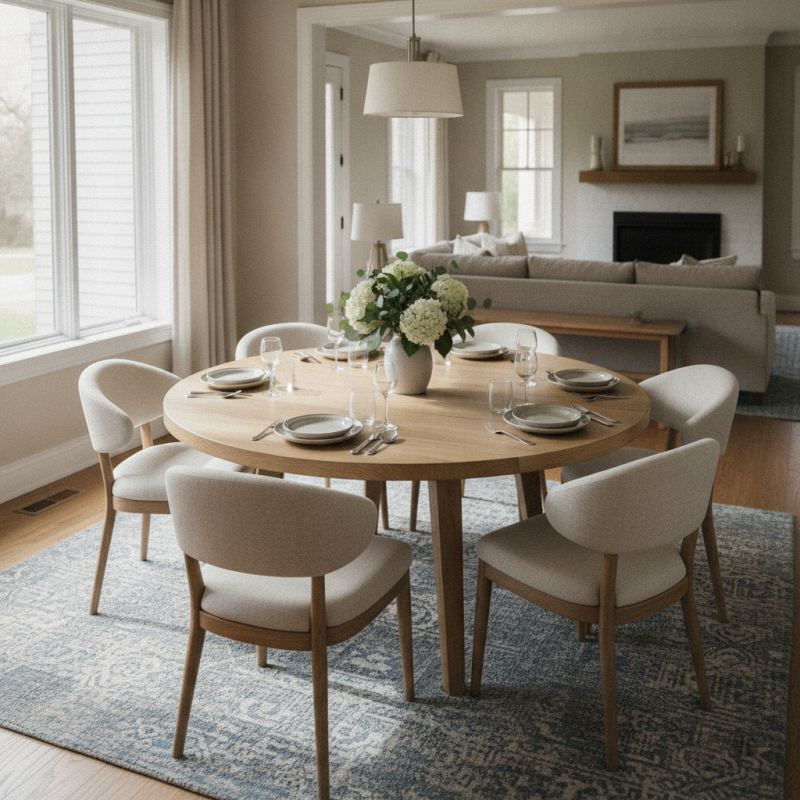
Benefits of a Round Dining Table for Social Interactions
Round dining tables uniquely foster social interactions. Their circular shape encourages easy conversation. Everyone at the table faces one another. This structure removes the barriers created by corners. No head of the table exists. It creates a sense of equality among diners.
Gatherings become more intimate and engaging. The close proximity allows for lively discussions. Sharing stories and laughter feels more natural. People can lean in and connect better. It encourages a flow of ideas and experiences.
While there are drawbacks, like space considerations, the benefits often outweigh the negatives. Narrow areas may limit the number of guests. Also, larger round tables can feel overwhelming in a small space. Reflection on these aspects is crucial before making a choice. Ultimately, a round dining table can enhance the quality of your social interactions significantly.
Space Efficiency: Fitting Round Tables in Various Room Configurations
Choosing a round dining table can greatly enhance space efficiency, especially in unique room configurations. The circular shape allows for easier movement around the table, making it less likely to obstruct walkways. This is particularly beneficial in smaller areas where every inch counts. A round table can also create a more inviting atmosphere, encouraging conversation among guests.
**Tip:** When selecting a round table, consider its diameter. A table that is too large might overpower a small room. Aim for one that allows at least three feet of space between the table and walls or furniture.
Additionally, round tables work well in nooks and corners. They can fit snugly against walls, freeing up space for other furniture. If your dining area transitions into a living space, a round table can maintain visual flow. This creates a cohesive look throughout.
**Tip:** Use a table with extendable options. This adds flexibility for hosting gatherings without compromising everyday space. It’s essential to find a balance between functionality and aesthetics. A round table should enhance, not hinder, your room's layout.
Design Versatility: Round Tables in Different Decor Styles
Round dining tables offer unique advantages in various decor styles. They create an inviting atmosphere, encouraging conversation among guests. This shape naturally facilitates a more intimate setting. There’s no head of the table, so everyone feels included.
In modern homes, round tables adapt effortlessly to different aesthetics. They can complement minimalist designs with sleek materials or enhance rustic charm with natural wood finishes. Consider a round table with a marble top in a contemporary space. It creates a striking focal point. Meanwhile, a vintage wooden round table can anchor a cozy farmhouse design.
However, choosing a round table may require careful consideration of size and layout. A small round table can feel cramped in a large room, while an oversized one may limit movement in a compact space. Finding the perfect balance is essential for functionality and comfort. Each choice should reflect personal taste and lifestyle needs.
Accessibility and Comfort: Round Tables for All Ages and Abilities
Round dining tables offer unique advantages in terms of accessibility and comfort. These tables provide a welcoming environment for gatherings. Their design allows for easy movement, making them ideal for people of all ages and abilities. Unlike rectangular tables, round options eliminate sharp corners. This feature reduces the risk of accidents, particularly for children and elderly individuals.
Comfort is amplified at round tables. Everyone sits at an equal distance from one another. This design fosters an inclusive atmosphere, making conversation easier. Guests can easily reach for dishes across the table, enhancing the dining experience. However, round tables can limit the surface area for serving food. Some may find it challenging to fit larger platters on the table.
Moreover, the size of the round table matters. A smaller table can feel cramped with many guests, leading to uncomfortable interactions. In contrast, larger round tables may take up more space in the room, impacting overall flow. It’s essential to consider the room dimensions and the number of guests often invited. Balancing comfort and space is crucial.
Creating Intimacy: The Advantage of Round Tables for Small Gatherings
Round dining tables offer a unique edge for small gatherings. Studies show that
seating arrangements impact social dynamics significantly. A round table encourages
interaction among guests. It eliminates the barrier of corners, fostering a sense of closeness.
According to industry insights, 75% of people feel more engaged at round tables. The layout promotes conversation
flow and bonding.
Moreover, round tables are space-efficient. They fit well in compact dining areas. A report
by the Home Furnishings Association notes that smaller homes increasingly prefer round designs. These tables maximize usable
space while accommodating guests comfortably. Even in tight spots, they can enhance dining experiences.
However, round tables may not suit every situation. They lack defined spaces for dishes compared to rectangular options. In some
cases, guests may find it difficult to reach food. Reflecting on the balance between social intimacy and practicality, homeowners
should assess their needs carefully. Understanding the dynamics can lead to a more fulfilling dining experience.
FAQS
: Round tables enhance space efficiency and allow easier movement. They create an inviting atmosphere for conversation.
Opt for a table that allows at least three feet of space from walls or furniture to avoid crowding.
They fit snugly against walls or in corners, maximizing usable space while maintaining a harmonious layout.
Yes, they adapt well to various styles, from minimalist to rustic. They can complement any design aesthetic.
An extendable option adds flexibility for gatherings while saving space during everyday use.
The right size is critical. A small table in a large room feels cramped; an oversized table in a small room hinders movement.
Yes, they maintain visual continuity, especially in areas where dining and living spaces merge.
Consider movement and comfort. Balance aesthetics with functionality to create an enjoyable dining experience.
Choose a style and finish that resonate with your lifestyle. This choice adds character to your space.
Forgetting to consider space and layout often leads to discomfort and an unbalanced room. Strive for harmony.
Conclusion
When considering the question of "Why choose a round dining table over a rectangular one," it becomes clear that round tables offer numerous advantages that enhance the dining experience. One of the key benefits is their ability to foster social interactions, as everyone is equidistant, promoting conversation and inclusivity. Additionally, round tables are space-efficient, making them an ideal choice for various room configurations, whether in smaller apartments or larger dining areas.
Beyond functionality, round tables showcase remarkable design versatility, elegantly fitting into various decor styles, from traditional to modern. They also cater to accessibility and comfort, accommodating diners of all ages and abilities. Furthermore, round tables create intimacy, making them particularly advantageous for small gatherings, where fostering connections is essential. Ultimately, the selection of a round dining table can significantly elevate dining experiences and enhance the overall atmosphere of a home.
 Forton Furniture
